Interoperable database for physicochemical analysis of written cultural heritage
Explore, visualize, and share written cultural heritage materials analysis data within the Biblissima+ ecosystem.
Thinking and modeling written cultural heritage materials
ManuSpectrum was developed within Cluster 2 — “Consideration and searchability of materials analysis data” — of the ANR Biblissima+ programme. This cluster aims to ensure the long-term archiving and reuse of physicochemical analysis data for manuscripts, inscriptions, seals and other heritage objects, in partnership with Huma-Num.
Through structuring and standardizing data according to shared models, the project provides reliable, easy-to-use tools accessible to non-specialists. Built on Arches, an open-source platform for heritage data management, ManuSpectrum facilitates data access and collaboration between researchers from different disciplines.
The model focuses on identifying the component as a pivot axis between the object, its context, the analyses, and their interpretations, using thesauri and authority databases to contextualize information on heterogeneous documents.
Biblissima+ — Cluster 2
ManuSpectrum is part of the Biblissima+ programme, an observatory of ancient written cultures. Within Cluster 2, the objective is to archive, share and enable searching of materials analysis data from the community, ensuring interoperability with the Biblissima portal and written cultural heritage standards.
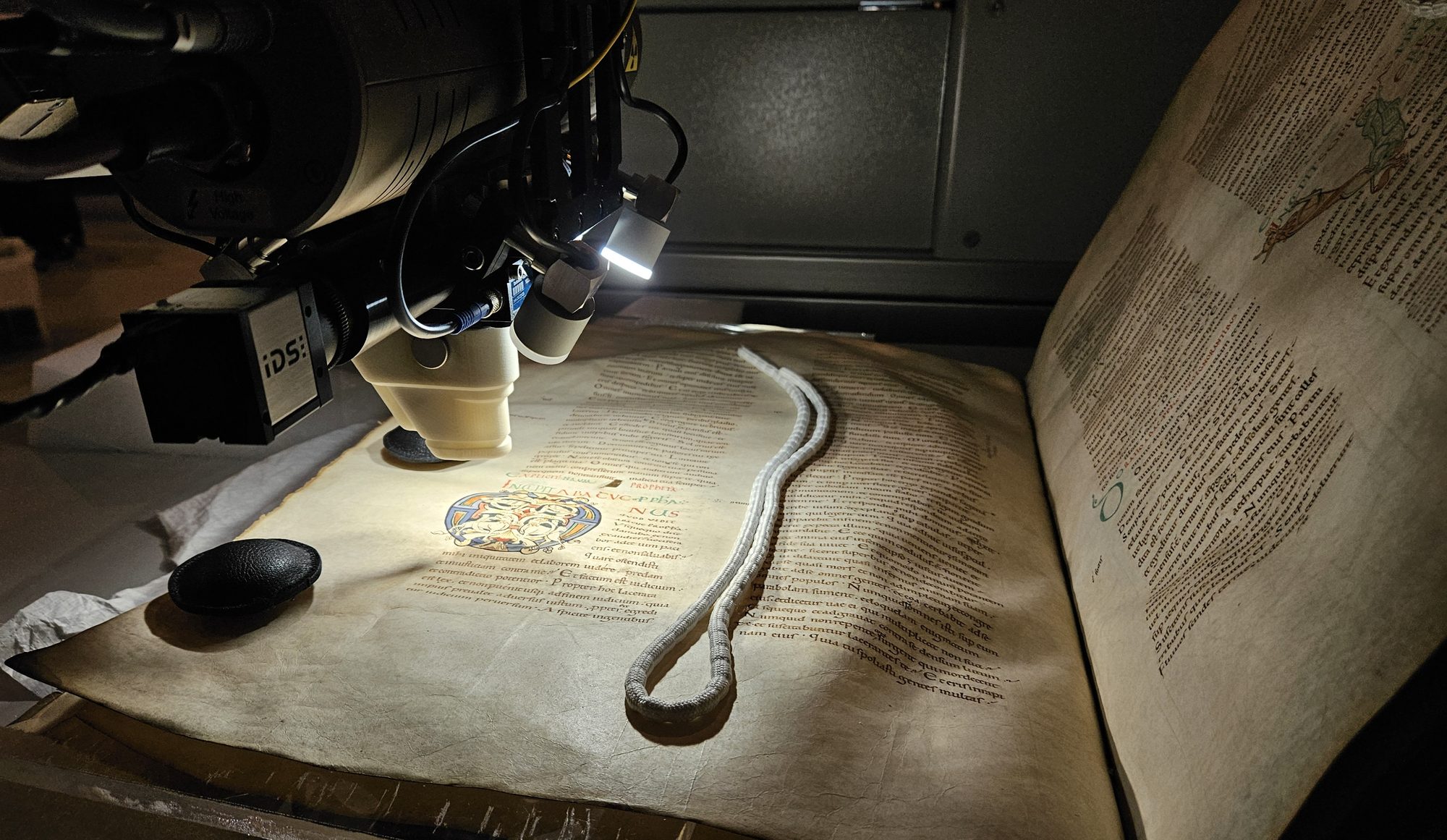
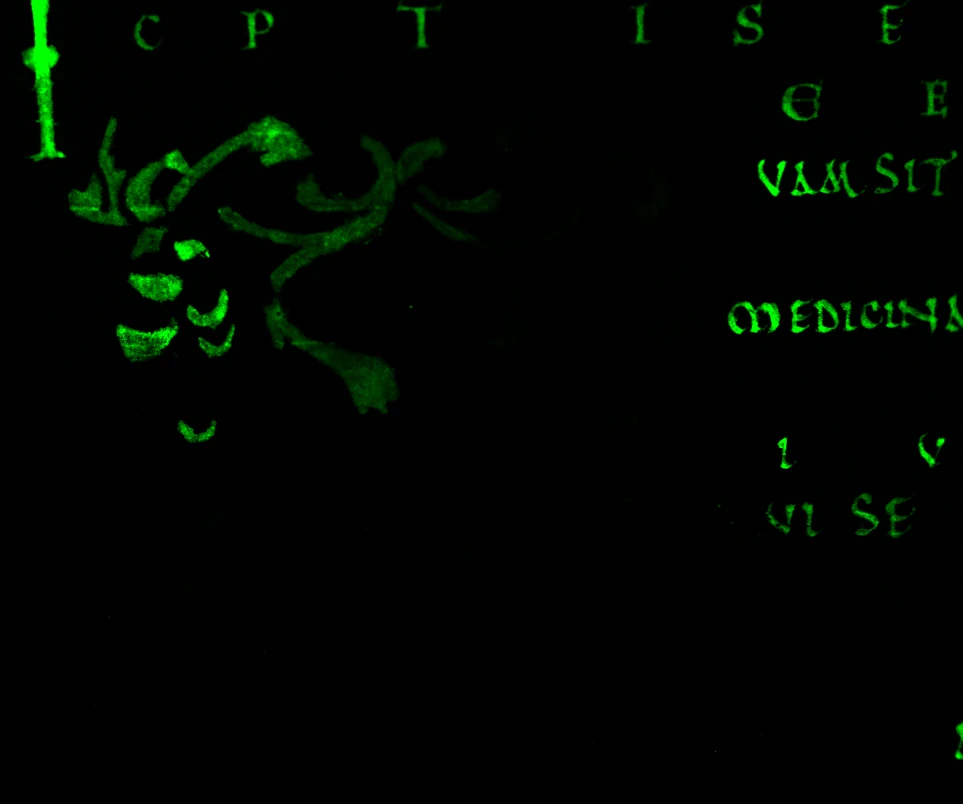
Macro-XRF scanning of a manuscript
In situ acquisition of elemental maps by macro X-ray fluorescence scanning
© Centre de Recherche sur la Conservation (CRC), 2025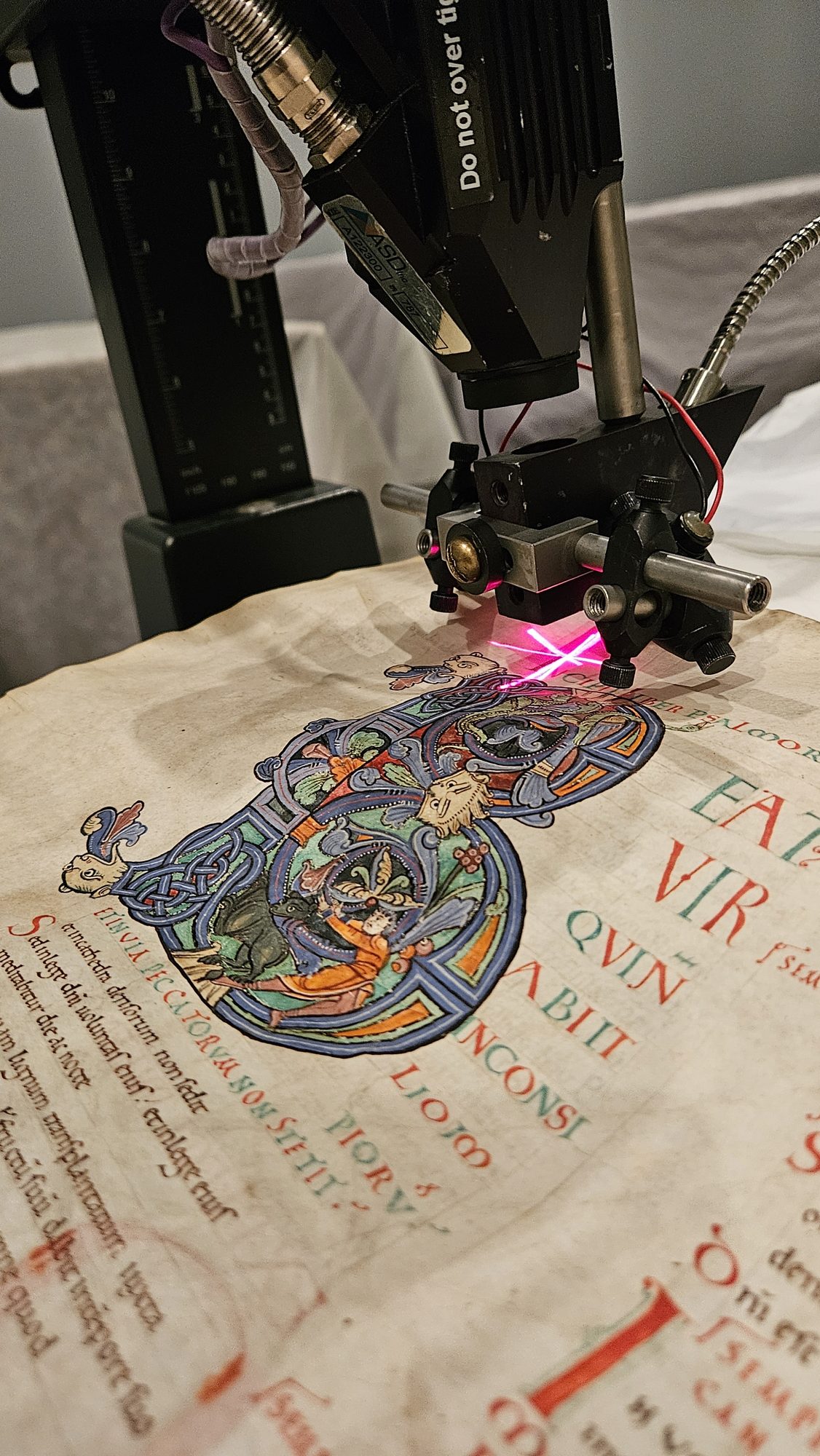
Fiber optic reflectance spectroscopy (FORS)
Non-invasive characterization of pigments by fiber optic reflectance spectroscopy
© Centre de Recherche sur la Conservation (CRC), 2025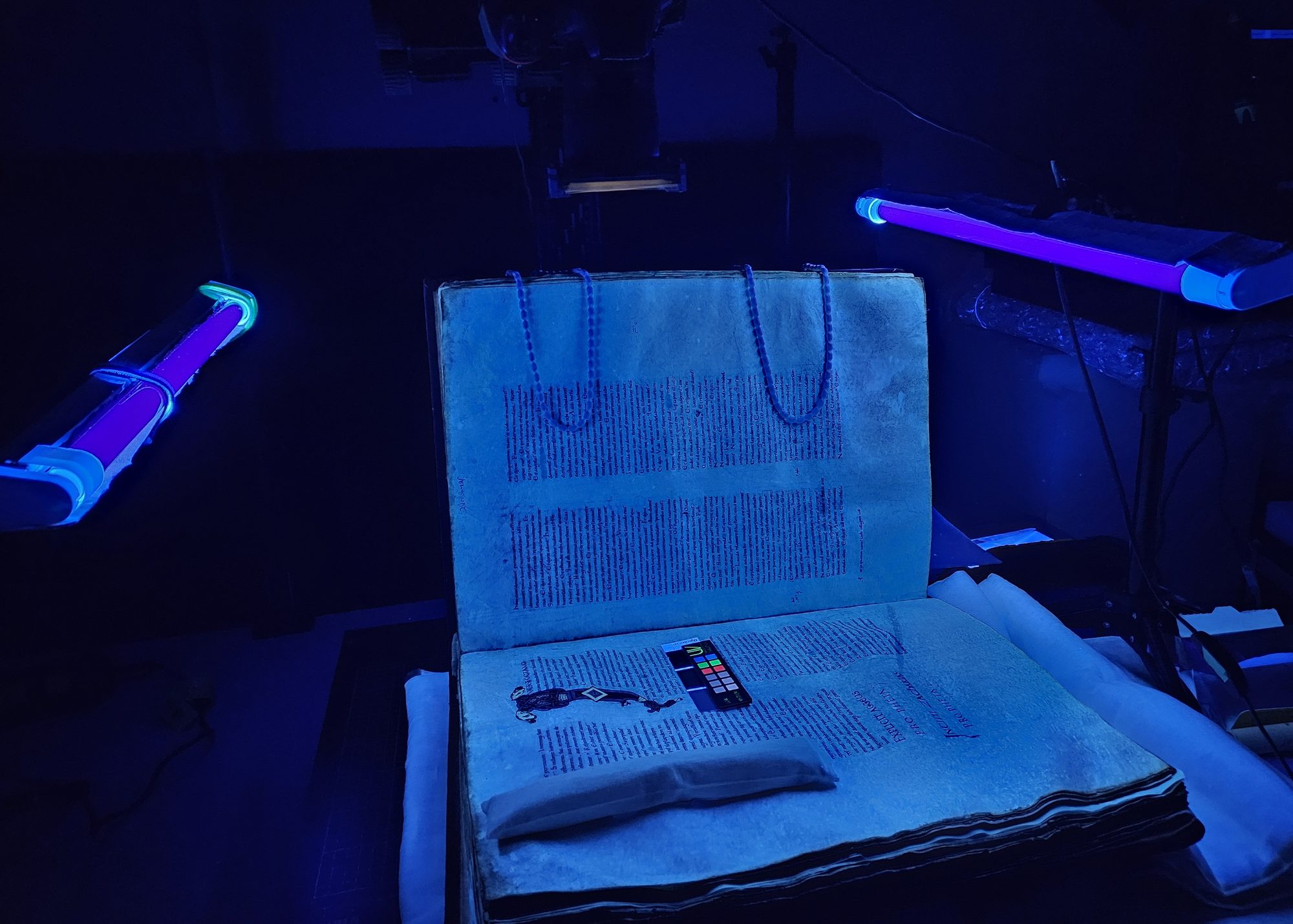
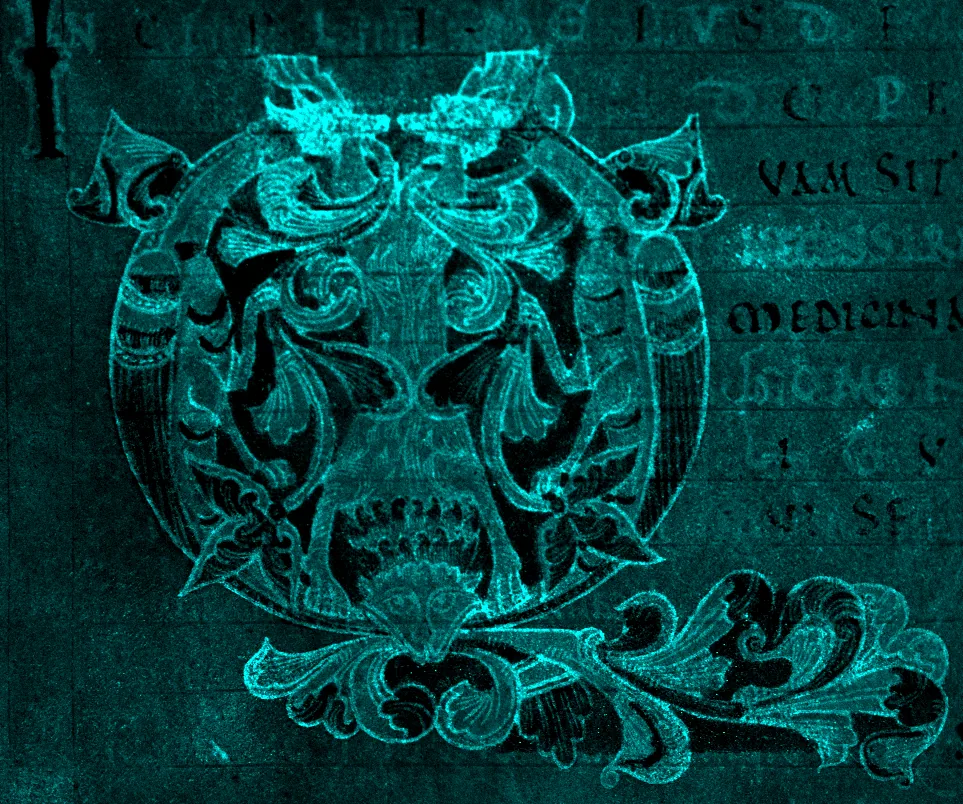
UV hyperspectral imaging
Ultraviolet hyperspectral imaging to reveal details invisible to the naked eye
© Centre de Recherche sur la Conservation (CRC), 2025What you can discover
A platform designed to explore physicochemical analyses on historical documents, correlating data with their written cultural heritage context.
Spectra and analysis data
Visualize and compare reference spectra and analysis datasets. Explore XRF, FTIR, Raman, and other analysis results directly on the platform.
IIIF Annotations
Analysis data is exposed as IIIF annotations, making it accessible from any compatible viewer. The mirador-xyviewer plugin, developed for Mirador 4, allows any external site to visualize ManuSpectrum's spectral data (XRF, Raman, FTIR, UV-Vis) directly overlaid on high-resolution document images.
Interoperability and Standards
Data is structured according to the CIDOC-CRM (v7.1.2) and CRMsci (v2.0) ontologies, and enriched with the AGORHA and AAT Getty thesauri, ensuring interoperability with international heritage systems and the Biblissima portal.
Material Characterization
Explore the layers, materials and chemical elements identified on manuscripts, printed books and other written heritage — pigments, inks, binders, parchment and paper supports — with different levels of reliability and characterization.
Visualize physicochemical analyses
From elemental mapping to multispectral imaging, explore the different analysis techniques applied to written cultural heritage objects.
Explore the database
Search by material — a pigment, an ink, a support —, analysis technique, written cultural heritage object, or chemical element. Advanced filters available in the search interface.